Monday, 16 September 2019

From the @TES Blog: 8 Routines For Teachers To Nail Before Half-Term


The idea of routines in the classroom might be a bit of a turn-off for some, but they aren’t about creating robot children who don’t think.
 
They are about making time for the stuff that really matters and providing children with the boundaries and clarity they need to get on with learning...
 

The Right Book for the Right Child (Guest Blog Post By Victoria Williamson)

I remember very clearly when my love affair with Jane Austen began.

It was the summer between fifth and sixth year of high school, when I was seventeen. I’d picked up Pride and Prejudice for the first time, but not because I actually wanted to read it. It was a stormy day despite it being July – too wet to walk up to the local library. It was back in the nineties before the internet, Kindle, and instant downloads were available. I wanted to curl up on the sofa to read, but I’d already been through every single book in the house. All that was left unread at the bottom of the bookshelf was a row of slightly faded classics belonging to my mother. I only picked the first one up as there was clearly a book-drought emergency going on, and I was desperate.

The reason I didn’t want to read it, was because I already knew it was going to be totally boring.
Well, I thought I knew it. I’d already ‘read’ the classics you see. When I was ten or eleven, thinking I was very clever, I branched out from my usual diet of fantasy and adventure books, and opened a copy of Bleak House by Charles Dickens. I can’t remember why now – it might have been another rainy day and another book emergency situation, but whatever the reason, I spent several miserable hours ploughing through page after page of unintelligible drivel about Lincoln’s Inn, Chancery, and a bunch of boring characters who said very dull things, before giving up in disgust.


I ‘knew’ from that point on that the classic novels teachers and book critics raved about were the literary equivalent of All Bran instead of Sugar Puffs, and I wasn’t interested in sampling any more.

I didn’t pick up another classic until that rainy day at seventeen, when I sped through Pride and Prejudice in a day and a night, emerging sleepy-eyed but breathless the next day to snatch Emma from the shelf before retreating back to my room to devour it. That summer, after running out of books by Austen, the Brontes and Mrs Gaskell, I tried Bleak House again. And what a difference! Where before I had waded thorough unintelligible passages without gaining any sense of what was going on, I now found an engaging, and often humorous tale of a tangled court system far beyond the ‘red tape’ that everyone was always complaining about in present-day newspapers. Where before I’d only seen dull characters who rambled on forever without saying anything at all, I discovered wit and caricature, and a cast of people I could empathise with.

That was when I realised that there wasn’t anything wrong with the literary classics – it was me who was the problem. Or rather, the mismatch between my reading ability when I was ten, and the understanding I had of the world at that age. I could read all of the words on the page, I just didn’t understand what half of them meant, and I thought the problem was with the story itself.

I was reminded of this little episode in my own reading history recently when I spent the summer in Zambia volunteering with the reading charity The Book Bus. One afternoon we were reading one-to-one with children in a community library, when I met Samuel. Samuel had a reading level far above the other children, and raced through the picture books and short stories they were struggling with. I asked him to pick a more complicated book to read with me for the last ten minutes, and after searching through the two bookshelves that comprised the small one-roomed library, he came back with a Ladybird book published in 1960, called ‘What to Look for in Autumn.’

He did his best with it. He could read all of the words – the descriptions of wood pigeons picking up the seeds to ‘fill their crops’, the harvesters – reapers, cutters and binders – putting the oats into ‘stooks’ and the information about various ‘mushrooms and fungi’, but he didn’t understand anything he was reading. Needless to say I looked out a more appropriate chapter book from the Book Bus’s well-stocked shelves for him to read the following week, but the incident reminded me of the importance of getting relevant books into children’s hands if we’re to ensure they’re not turned off by the reading experience.

This is a problem often encountered in schools when teachers are looking for books to recommend to children. A lot of the time we’re so focused on getting them to read ‘good’ books, the ones we enjoyed as children, or the ones deemed ‘worthy’ by critics, that we forget that reading ability isn’t the only thing we have to take into consideration. We have to match the child’s level of understanding to the texts that we’re recommending – or in the case of that Ladybird book, get rid of outdated books from our libraries entirely!

Children often find making the leap to more challenging books difficult, and comfort read the same books over and over again – sometimes even memorising them in anticipation of being asked to read aloud with an adult. If we’re to help them bridge this gap, we must make sure our recommendations are not only appropriate for their reading level, but match their understanding too, introducing new words and ideas gradually in ways that won’t put them off.

Samuel and I were both lucky – we loved reading enough that one bad experience wasn’t enough to put us off, but other children might not be so fortunate. Let’s ensure all children have the chance to discover the joy of reading, by getting the right books into the hands of the right child.

Victoria Williamson is the author of Fox Girl and the White Gazelle (click here for my review) and The Boy with the Butterfly Mind, both published by Floris Books.

Monday, 9 September 2019

From @Matr_org: Understanding Maths Anxiety: A Parents’ Guide On How To Overcome This Primary School Problem


"I remember finding ways to get out of maths lessons as a youngster.

My favourite ruse was to offer to tidy up the teacher’s cupboard – I even clearly remember stacking the maths textbooks neatly on the shelves, feeling inwardly smug that I did not have to open them and attempt the questions inside.

I recall my dad spending what seemed like hours with me trying to help me to understand negative numbers and how to calculate them – unfortunately, his pictures of eggs and egg cups didn’t help at all although I appreciated his efforts!"

https://matr.org/blog/understanding-maths-anxiety-parents-guide/

Monday, 2 September 2019

Choosing The Gods by Steve Kershaw, Author Of Mythologica (Guest Post)

Imagine my joy! I’m a Classicist, a person who spends his life in the world of dead languages and the people who don’t speak them anymore, when all of a sudden I receive a fantastic opportunity to collaborate on a fabulously illustrated children’s encyclopaedia featuring fifty of Ancient Greece’s most powerful gods and goddesses, fascinating earth-dwelling mortals, and terrifying monsters. What could be better? I teach this stuff for Oxford University, but I’ve loved it ever since I was a kid myself. At my lovely Primary School in Halifax in Yorkshire, our teachers would read to us from wonderful books for the last 20 minutes of each day. And when a new young teacher read bits out of Homer’s Iliad and Odyssey to us, I thought this was totally amazing! Gods, monsters, heroes, astonishing adventures… I was entranced!

So who should I include in Mythologica? Obviously the twelve Olympian gods and goddesses. They can be a pretty jealous lot: if I’d left any of them out, they would just have ruined my life in the most horrible way imaginable. But they are also completely entrancing: Zeus, who can blast even the most awesome of giants into oblivion with his thunderbolts; Athena, his daughter, born from his head, with her mesmerising grey-eyed beauty and fearsome intelligence; Artemis, running free in the countryside with her dogs; or the blacksmith Hephaestus, who was severely disabled but still physically powerful, and married to Aphrodite, the most beautiful female in the universe! In some ways they seem incredibly distant and alien, and yet again they can be so like us. They are a close-knit family, and they behave like one, always squabbling and arguing with each other, but if any outsider threatens them, they immediately come together in inseparable unity. They’re just so easy for children to relate to!

Illustrations from the book by Victoria Topping
Selecting the mortals was like choosing a sports team from a squad of world superstars. Some, like wily Odysseus, beautiful Helen, mighty Heracles, swift-footed Achilles, and Medea the barbarian witch, picked themselves, but sadly others had to be left on the bench. Greek mythology can seem a bit male-dominated, but we wanted to strike a slightly fairer balance between male and female characters, and the ones who made the cut had to bring the amazing stories, staggering achievements, and brilliant skills that would excite our interest and emotions, and make us think. Our mortals needed to be people who we could admire, fear, love, hate, laugh at, or feel sorry for. As heroes and heroines they had be able to do things that we ordinary mortals could never dream of, face unimaginable dangers, make terrible mistakes, and possibly win eternal glory.

Our humans also needed to look great, and to provide a diverse range of character types. So in looking for inspiration for Victoria Topping’s magnificent artwork we thought about their personalities and behaviour, what they wore, what distinctive things they carried, their hair- and/or skin-colour, what their eyes looked like, where they lived, who they interacted with, and what amazing powers or abilities they might have. I think we found a hero for a very reader.

When it came to the monsters we just wanted the biggest, baddest, mightiest, weirdest, wildest, snakiest, doggiest, fire-breathingest, flesh-eatingest, turn-you-to-stone-est, set of colourful, evil, hybrid creatures that the Greek myths could offer. They had to encapsulate that wonderful world of ‘the other’ that kids find so entrancing. Cerberus the hell-hound, the Gorgon Medusa, the dangerously alluring Sirens, the bronze giant Talos, and their various brothers and sisters all had to thrill, scare, and astound.

Why are these tales so important and enduring? At heart, they are just fantastic stories with wondrous characters, and children adore them for that reason alone. The myths are so vivid that we feel we can get to know the gods, monsters and mortals personally. We can meet Athena, travel with Jason, and fight with the Cyclops. But there’s more to them than that. Myths are good to think with. But they’re not preachy, and they’re often morally ambiguous. We don’t find straightforward answers; easy morals are sometimes hard to find; it’s not always about ‘Good people’ versus ‘Bad people’, with the Good ones winning in the end - even the good guys do bad things; life can be unfair; bad things happen when it isn’t your fault, but they also happen when it is; and, ‘they all lived happily ever after’ doesn’t happen very often. So these Greek myths challenge our children’s imagination, and invite them to reflect on how we live today, presenting them with lessons and problems not just about the world as we would like it to be, but about the world as it is. The world of Greek mythology is still very much our children’s world.

Steve Kershaw is an expert on dead languages and the people who don’t speak them anymore. He’s been captivated by the Greek myths ever since childhood when he used to read Homer’s Iliad with his torch under the bedclothes. Steve wrote his PhD under Richard Buxton, arguably the leading scholar on Greek myth in the world. He has taught Classics in numerous establishments, including Oxford University Department for Continuing Education and Warwick University. He runs the European Studies Classical Tour for Rhodes College and the University of the South. He’s also an internationally renowned jazz musician.

http://stevekershaw.com/

Saturday, 31 August 2019

Book Review: 'Spylark' by Danny Rurlander

Just as Daniel Craig's James Bond brought a more human dimension to the franchise, Danny Rurlander has broken the Stormbreaker mould with the unlikely hero of Spylark. True, Tom Hopkins has lost both parents and is living with a relative, but he also suffers bullying at school, has terrible claustrophobia and is living with the after-effects of an accident which has left him needing a walking stick to get about.

Tom is at risk of becoming withdrawn and reclusive and his love inventing machines and piloting his homemade drones seems to be making this worse. But flying is his escape - as he explores the beautiful surroundings of the Lake District using his drone's camera's live feed he feels free of his body and able to do all manner of things. However, a routine flight brings him into a world of danger and terror as he attempts to foil the plans of a criminal gang whose activity threatens to have world-wide consequences. Tom's freedom very quickly becomes captivity.

Thankfully Tom isn't in this alone - he reluctantly befriends two children who come to stay in his aunt's holiday cottage and, as he becomes tour guide to their Swallows and Amazons fantasy holiday, he takes them into his confidence. And a good job too - they prove crucial not only in helping him combat the criminals, but in causing Tom to break free of how his life's experiences are holding him back.

Although certain aspects of the book are recognisable, the storyline is far from formulaic - halfway through it seems like the action is soon to be over: not so. You see, the familiar idea of children being taken seriously enough to have done what a country's secret services couldn't have done is rubbished in this story, lending it an air of credible realism. The fact that some adults don't believe Tom and his friends means that the story must go on and the no-nonsense advice of more trusted adults ensures that it does.

Spylark is an awesome page-turner and an incredible feat for this first-time author. If Arthur Ransome legitimately got so many sequels out of his sailboats-and-sandwiches romps (and don't get me wrong, they thrilled me) then Rurlander could certainly provide us with a brilliant follow-up to Spylark - I know I'd be queueing up to read it. Immediately gripping, this book would go down well with upper key stage two readers and upwards, not least with those considered to be reluctant readers. I couldn't recommend it enough - a cracking adventure.

Wednesday, 24 July 2019

3 Children's Books To Celebrate The 50th Anniversary Of The Moon Landing

With 2019 marking the 50th anniversary of the Apollo 11 mission's successful moon landing, it's no surprise that authors, illustrators and publishers have been hard at work producing some amazing non-fiction books by way of celebration. Whilst there are many children's books already available on the subject, it's always nice to welcome new ones into the fold, especially given that current design trends favour beautiful illustrations over stock photography. So, here are my three current favourites on the topic:

Balloon To The Moon by Gill Arbuthnott and Christopher Nielsen

Anyone who is familiar with Big Picture Press books will have some idea of what to expect: a large format, hardback book which couples easy-to-read but insightful information with the very best of illustrations. In this case its the retro-styled images of Christopher Nielsen which evoke an age gone by: the era of the great space race. The vintage drawings might remind an older reader of a time when astronauts were just the fantasy of sci-fi comics - younger readers will simply delight in the colourful depictions of a wealth of scientific and historic facts and stories.

'Balloon To The Moon' also cleverly employs a countdown to the moment when man finally stepped foot on the moon: it begins with chapter 10, running all the way through to chapters 3, 2, 1 and then Lift-Off, Lunar Orbit and Re-Entry. Along the way, Gill Arbuthnott tells the story of everything that had to happen before Neil Armstrong could step out of that lunar landing module and utter his immortal words. Filled with facts and figures, this book provides accessible, bite-size chunks of space travel history - children of all ages will learn something from this stellar publication.


'Where Once We Stood' by Christopher Riley and Martin Impey

New publishing house Harbour Moon Publishing are making a great first step with this visual feast of a book. Illustrator Martin Impey's pencil drawings and watercolour paintings take centre stage in this pleasingly large-scale paperback book. This isn't just a book with one or two pictures in it; every one of its 128 pages features multiple, largely monochrome but highly evocative, images. This book certainly is a visual treat - even if the text were ignored one could spend a great deal of time exploring its pages, wondering at one of the world's greatest dreams come true.

But there is text in this book too, and film producer, director and writer Christopher Riley presents the real-life conversations of the Apollo astronauts alongside urgent, present tense narrative. This combination makes for compelling reading - readers, helped along by the illustrations, will easily imagine that they are there with the astronauts, or in the control room, at least. Featuring the voices of astronauts from all 6 successful Apollo moon landings, this book might take a younger reader a while to make their way through as they savour both the text and the pictures. That's not to say there is too much, rather that this book is something unique, being unlike other non-fiction books, and therefore necessitating a different kind of reading. 'Where Once We Stood' is the kind of book that will be taken off the shelf time and time again and is an absolute must for any space-loving child or classroom where space is being taught about - you won't find anything else like this out there.


Neil Armstrong: First Man On The Moon by Alex Woolf (with Illustrations by Luisa Uribe, George Ermos and Nina Jones)

The latest in Stripes' Trailblazers series, Alex Woolf's biography of Neil Armstrong, presented in a novel-sized paperback, is the perfect thing for KS2 readers who want to know more about one of the world's most famous men. Stepping right back into his childhood and following Armstrong's life through to his last days, the story of how one man became the astronaut to first step foot on the moon is told compellingly yet simply - I can't imagine a reader wanting to even put this down.

The main story is interspersed with fact files, illustrations and other asides which, far from interrupting the flow of the narrative, add to it and provide a greater level of insight than one might expect from a book like this. Young readers will not only close the book more knowledgeable about one of the greatest feats of mankind, they will also leave feeling inspired by the level of commitment and hard work that Neil Armstrong demonstrated throughout his life - Woolf surreptitiously draws life lessons out of Armstrong's story, giving the book another dimension altogether. The book finishes nicely with a word on the legacy of both Armstrong and the Apollo missions, encouraging readers to look ahead to how 'spaceship earth' might be protected in the future.

That's all for now, but watch this space for more space-themed children's books - I have a whole shelf's-worth that I'd love to share with you! Here's a sneak peek of some of them:

Wednesday, 10 July 2019

Children's Books Reviewed By Children #2

In our house we have recently revamped the bedtime routine to contain A LOT more reading. This was partly out of necessity - the nights are so light that they couldn't go to sleep as early as they do when it is dark. They were also doing some pretty wild stuff pre-bedtime which DID NOT make them at all calm or ready to sleep. The answer: you already know: reading, of course!

As a result, my three children have read a ridiculous number of books and now they have industriously written a whole host of comments about the books for you. Here are the books they've chosen along with a few of their thoughts on them:


When Tyler is sent to summer camp, she can’t resist packing one of her latest science projects – the Hologramaphone 3000. Problem is, some of the phone’s functions have EXTREME side-effects, the kind that can turn your best-friend into a ferocious werewolf!

But when Tyler, Dylan and Ashley band together, there’s no problem that they can’t solve – no matter how big, hairy, and terrifying.

You would definitely so love it! I would probably say ages from 6 -10. Well, maybe. Apart from that, I would still recommend it to friends and family. - A, 7

I liked the part where they sneak into Pipper's office to get Tyler's Hologramaphone 2000 because Courtney and Pipper suddenly come in and Courtney starts talking about how clever she is. There's a really funny bit where Courtney says: "You can't say werewolves are real until you've actually see one." That bit's soooo funny! This book is 10/10 is for 7-13 year-olds. My favourite character is Courtney because she is show-y-off-y and funny. Enjoy! - I, 8


A swimming lesson takes an exciting turn when Fliss is magically whisked away to the Indian Ocean! There she finds a young dolphin in trouble and she knows she has to help. But she’s scared of deep water, and who knows what other animals there might be out there! Can Fliss face her fears and save her new friend?

A beautifully detailed book. I liked the bit where Fliss swam right up to the tiger shark and bopped it on the nose, just to save Spinner. I think Fliss was very brave to swim out of her depths, right next to a whale shark! I liked how welcoming and kind the author made Izad. I also liked how the author explained about the reef and how beautiful it was. I would highly recommend this book to friends and family. I think it was a very good book! It was awesome!  - I, 8

The Flute by Ken Wilson-Max, Illustrated by Catell Ronca (Tiny Owl)

Hear the whisper of the flute and see how it floats like a butterfly or blows like cold, grey wind. Discover how music can make you move and feel!

"I like Tiny Owl - he's a good book owl, isn't he?"

This book is about playing the flute. The flute makes nice noises but the sounds are like colours. It makes me feel like I want to play the flute and make a nice song with it. I like the part at the end where is says 'And a lilac sigh' because it has lots of colours. I like the colours in this book. - J, 5

Click here to watch a video of Ken Wilson Max reading The Flute.

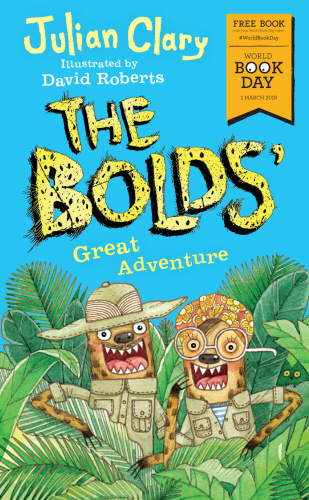
The Bolds' Great Adventure by Julian Clary, Illustrated by David Roberts (Andersen Press)

Fasten your seatbelts - it's a special adventure for World Book Day with Teddington's wildest family! Learn just how our intrepid hyenas managed to get from their African safari park onto the plane and off to their new home in England. It's quite a remarkable, and some would say, unbelievable tale - but there are many laughs along the way! 

The Bolds are Hyenas. One day, the find some safari clothes lying near a river. There they found clothes, keys and passports. So they decided to travel to England. When they get there, they get things so muddled up! Mum poops in the shower, eats a wooden fruit and other bad stuff!

I liked the jokes that Mr. Bold makes up - they are very extremely funny!

This book is all about trying hard and listening and it is very fun.

Thank you for making this book, Julian Clary and David Roberts! - A, 7

The Hideaway Deer by Holly Webb, Illustrated by James Brown (Stripes)

When Lola moves house she can’t help feeling sad to leave her old friends and life behind. She’s always been shy and worries it’ll be hard to make friends at her new school. It’s not all scary, though. Lola loves her new home with its rambling garden and the deer that sometimes wander in through the broken fence.

Then one day she comes across a fawn who seems to be in trouble. Lola is determined to do everything she can to help the terrified little deer, but will she be able to do it on her own?


This book is amazing! It's all about a deer who has lost her mum. Her name is Dapple.

This book is all about growing up, leaving your animal friend and moving places.

I liked the bit when Lola stands in front of her class and talks about freeing the deer. - A, 7

Aunt Amelia by Rebecca Cobb (Macmillan)
When Mum and Dad go away for the night, Aunt Amelia comes to look after one very cross little girl and boy. They do NOT want to be looked after and, even worse, Mum has left a list of boring instructions. But Aunt Amelia turns out to be rather different from expected . . . and a LOT more fun!

It's about Aunt Amelia coming to babysit the children. Mum and dad give her a list but they do everything wrong and they have loads of fun! They have fun swinging on trees; they have fun going on Aunt Amelia's back in the pond; they have fun eating loads of ice cream and they have fun eating sweets! At the end, they get ready for mum and dad coming back and they sweep and mop the house. I like everything about this book! - J, 5

My Babysitter Is A Robot by Dave Cousins, Illustrated by Catalina Echeverri (Stripes)

When Grandma creates a robot babysitter for twins Jake and Jess, chaos ensues!

Robin is embarrassing, clumsy and, worst of all, programmed to make them do their homework. They're also pretty sure he thinks their dog is a baby. The twins decide they have to do something before everyone realizes that Robin is a robot. But getting rid of their new babysitter will mean putting aside their sibling squabbles and working together, which might be an even bigger challenge...

My Babysitter Is A Robot is so good! This story is all about a robot who is very strict. I liked it when they were at the school fair and Robin did knock down the coconuts because the children found out that the coconuts were glued on! I also liked the part when they put salt in the sugar bowl for Olivia's party buns! - A, 7

Star Friends: Moonlight Mischief by Linda Chapman, Illustrated by Lucy Fleming (Stripes)

When the residents of Westcombe enter the Best Kept Village competition, they appear to have a helping hand – someone has tidied the village overnight! No one knows who has mowed the lawns and painted the fences but the town is looking neater than ever. Then pets and toys start to go missing. The villagers are upset and worried, and the Star Friends suspect that dark magic is involved. They're going to have to use all of their skills to solve this latest mystery...

In Star Friends: Moonlight Mischief someone's doing dark magic! There are shades in dolls and the dolls come alive! First, they do a good thing, then bad, good, bad.

This book is all about dark magic, powerful girls and trying hard.

I really liked it when they were having to fight the shades. Oh, the book is so good! - A, 7

The Nothing To See Here Hotel by Steven Butler, Illustrated by Steven Lenton (Simon & Schuster)

Welcome to The Nothing to See Here Hotel! A hotel for magical creatures, where weird is normal for Frankie Banister and his parents who run the hotel.

When a goblin messenger arrives at The Nothing to See Here Hotel, announcing the imminent arrival of the goblin prince Grogbah, Frankie and his family rush into action to get ready for their important guest. But it soon becomes obvious that the Banister family are going to have their work cut out with the demanding prince and his never-ending entourage, especially when it turns out the rude little prince is hiding a secret..

I liked the bit where Mrs V gobbles Grogbah up in her sleep. I also like how the Molar Sisters speak - 'Thith ith amathing!' - they speak like that because they have lost so many teeth! It's good when the pirates come and have a fight with the goblins! It turns out that Grogbah has the encrusted diamond aaaaaaaaaaaaall along! This book is 10/10 and is for 7s and over. My favourite character is Nancy because she is a very calm, lovely spider. This book is amazing. - I, 8

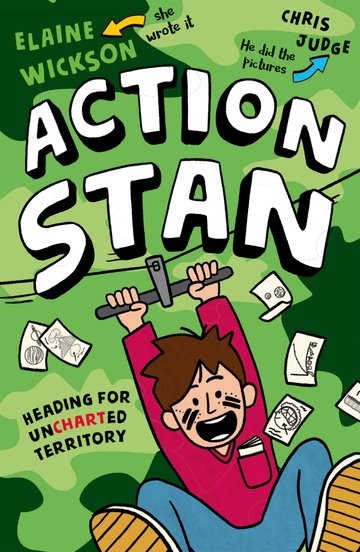
Action Stan by Elaine Wickson, Illustrated by Chris Judge (OUP Oxford)

Stan and his little brother Fred are off on a school trip to an outdoor adventure camp. Stan has been asked to keep an eye on Fred and his friends while they're away . . . what could possibly go wrong!?
Packed full of infographics, charts, and diagrams, this hilarious and visually-exciting book will have huge appeal for young readers.

Charts - WOW! I liked the bit where Stan joins the dogs and he wears all the funny clothes. This book is definitely 10/10 and I'd say it's for 8-13 year olds. My favourite character is Maddies because she is dressed in black and the only streak of colour is purple in her hair. She chews bubblegum and stands up for her sister Billie. I also like the bits where calls Jess Alaska. - I, 8

The Travels of Ermine: Trouble in New York by Jennifer Gray, Illustrated by Elisa Paganelli (Usborne)

Meet Ermine. She may be small but she’s on a BIG journey around the world.

Ermine the Determined is off to explore NEW YORK.

She can’t wait to visit Central Park Zoo, ride in a yellow taxi, and zoooom to the top of the Rockefeller building!

But when her suitcase is switched, Ermine finds some robbers are hot on her tail…

I really like how Barry does his burps and tummy rumbles - they're so funny! Also, all the time in the book Barry and Harry are trying to get the diamond all along and Ermine doesn't even know!

I like the accidental trick where Ermine scatters nails on the floor and puts glue on the floor. She also puts chili sauce on the hotdog and fizzymints in the Coca-Cola. I think think this book should be for 7-10s and it's definitely a 10/10! Enjoy! - I, 8